


Cargo
Esbjerg Airport provides air cargo handling, heavy cargo handling and distribution services. Handling arrangements are agreed with the customer to meet the requirements of each transport operation.
With Esbjerg’s central role in the offshore, wind and energy sectors, the airport is a natural base for transport to and from the North Sea. Esbjerg Airport therefore supports businesses with their logistics when equipment, spare parts and other goods need to reach their destination. This includes both scheduled deliveries and time-critical shipments.
Customers work closely with the staff handling their cargo. This allows specific requirements to be identified early and practical arrangements to be coordinated from arrival to onward transport.
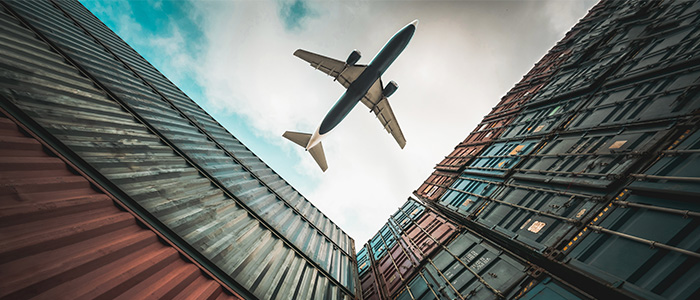
TRANSPORT CONNECTIONS AND CARGO HANDLING FACILITIES
Esbjerg Airport is located close to the E20 motorway and the Port of Esbjerg. This location offers opportunities to combine road, sea and air transport and bring several stages of the transport process together in Esbjerg. This is particularly relevant for businesses supplying equipment and materials to the offshore and wind industries.
The airport handles various types of cargo, from general cargo to special loads, and can accommodate cargo aircraft up to the size of a Boeing 757-200.
Each operation is planned according to the cargo’s dimensions, weight and handling requirements.
Esbjerg Airport also offers packing facilities and secure storage for transport and logistics companies. Cargo can therefore be prepared and stored until it is ready for the next stage of its journey.

We offer the following cargo handling options:
Speed loader: Can handle up to 3.5 tons and can be used by several types of aircraft.
Forklift trucks: Can lift 3 and 10 tons of cargo respectively.
Facts about Esbjerg Airport Cargo
Esbjerg Airport provides facilities and handling services for both general air cargo and more demanding transport operations.
- Aircraft size: Capacity to accommodate cargo aircraft up to the size of a Boeing 757-200.
- Cargo types: Handling of general cargo, heavy cargo and special cargo.
- Packing and storage: Packing facilities and warehouse storage for transport and logistics companies.
- Location: Close to the E20 motorway and the Port of Esbjerg, with opportunities to combine road, sea and air transport.
Each operation is planned in consultation with the customer, taking into account the cargo’s dimensions, weight and specific handling requirements.
Dangerous goods
There are strict requirements for the transport of dangerous goods. Documentation of the contents of the goods must be issued by the freight forwarder or carrier upon delivery to the airport.
When dangerous goods are delivered, Esbjerg Airport only checks that the accompanying documents and packaging of the goods comply with the rules in force at any given time.
Prices and fees
Please contact Esbjerg Airport’s Traffic Office if you would like more information about cargo handling, handling, and import/export fees.
Based on the information you provide, the Traffic Office can calculate the expected prices depending on the type of cargo, dimensions, handling equipment, and fueling.
The Traffic Office can be reached at +45 7616 9000. You can also send your inquiry by email to [email protected] with the subject line “Cargo Request.”
Submission deadlines
In order for Esbjerg Airport to provide satisfactory service, the following check-in times apply:
General Cargo:
Minimum 1 hour BEFORE scheduled departure.
Special Cargo (DGR, AVI, PER, BIG, etc.):
Minimum 3 hours BEFORE scheduled departure.
Ready for carriage
To ensure fast and efficient service, the following requirements must be strictly met:
The freight must be:
delivered at the agreed time
accompanied by a correctly issued AWB – with information about weight, contents, and any other relevant information
correctly labeled – all individual packages are labeled
properly packaged and does not pose a danger to other passengers, personnel, equipment, or the aircraft used for transport
Dangerous goods must be packaged in accordance with the special rules for the transport of dangerous goods (IATA).
